 Avery Pennarun
I think there are going to be about 100 times more programmers in the next few years. About a billion people.
Most of them won’t call themselves programmers. They won’t know Python. They won’t care whether their app uses React or SQLite. Many of them will never look at the source code. They’ll have an idea, tell a computer what they want, and the computer will make it.
That’s programming.
We got a glimpse of this at a Tailscale offsite earlier this year. Sandy, who works in our CEO office, was running an activity and needed to flip a coin. Nobody carries coins anymore, so she downloaded a coin-flipping app from the App Store. It worked, except every few flips it played an ad. More than a hundred people sat there waiting for a fake coin to finish monetizing itself.

Later, a couple of people from the Aperture team showed Sandy that she could make her own coin-flipping app with AI. Sandy isn’t a programmer in the traditional sense, but that turned out not to matter very much. Once she was at the terminal prompt, she described what she wanted and the AI made it. One of our engineers watching her said he recognized the expression on her face. She experienced the same feeling he’d had when he was twelve and first got a program to compile.
"Welcome to programming," he told her. "You’ll be chasing that high for the rest of your life."
The messy part was everything that had to happen before Sandy reached the prompt. Somebody helped set up a Linux VM, connect to it, configure SSH, and start the coding agent. Then someone had to explain localhost, a rite of passage in web programming: the app is running, it works perfectly, and nobody else can see it.
We have computers that can write computer programs now, an absurdly hard problem. And then we get stuck on localhost.
That tells us everything about what has to happen next.
A billion small programs
Two years ago I wrote The New Internet, my attempt to explain Tailscale beyond "VPNs, but nicer."
We can go back further, to David Crawshaw’s Remembering the LAN. Crawshaw wrote about growing up above his father’s medical practice in the 1990s. His dad was a doctor and a part-time programmer. He wrote software for the practice because he knew exactly what the practice needed, and because a program running on a small LAN could be simple enough for one person to build and maintain. It didn’t need a product team or a cloud architecture. It was a small program, written by the person who understood the problem, for the people who needed it.
That style of programming is mostly gone now.
Which is strange, because almost everything about computers got better. Programming languages got easier. Computers got faster. The Internet connected everyone on Earth. But somewhere along the way, making a small piece of software for six people became impossible. We can only do Serious Infrastructure Projects now, because everything has mandatory complexity.
Professional developers learned to work around the complexity. Everyone else mostly stopped trying, and started buying software instead. The little tool for twelve people became a subscription, and over time we traded the ability to shape our own software for the convenience of using whatever somebody else had already built, because it’s supposedly expensive to make our own.
AI changes software economics. A program can now be worth making, even when the audience is one person. A teacher can make something for one class. A dentist can make something for one office. Somebody can make a tool for one project at work, use it for a month, then forget about it. There doesn’t need to be a startup, a venture capitalist, a product manager, a pricing page, or a total addressable market.
Professional programmers are already benefiting from the revolution. Coding agents can turn their ideas into working code faster than ever. AI doesn’t remove judgment, testing, or taste. It just makes getting from an idea to reality much easier.
But I’m still waiting for the bigger change, which comes when the people doing this aren’t professionals anymore.
When making a tiny program is easier than searching the App Store, filtering out spam products, making an account, paying for another subscription, and sitting through the ads, more people are going to make tiny programs. Lots of them.
Programming got easier. Computing didn’t.
There’s an old triangle underneath almost every computing architecture: compute, storage, and networking. The program has to run somewhere, the data has to live somewhere, and the pieces have to communicate.
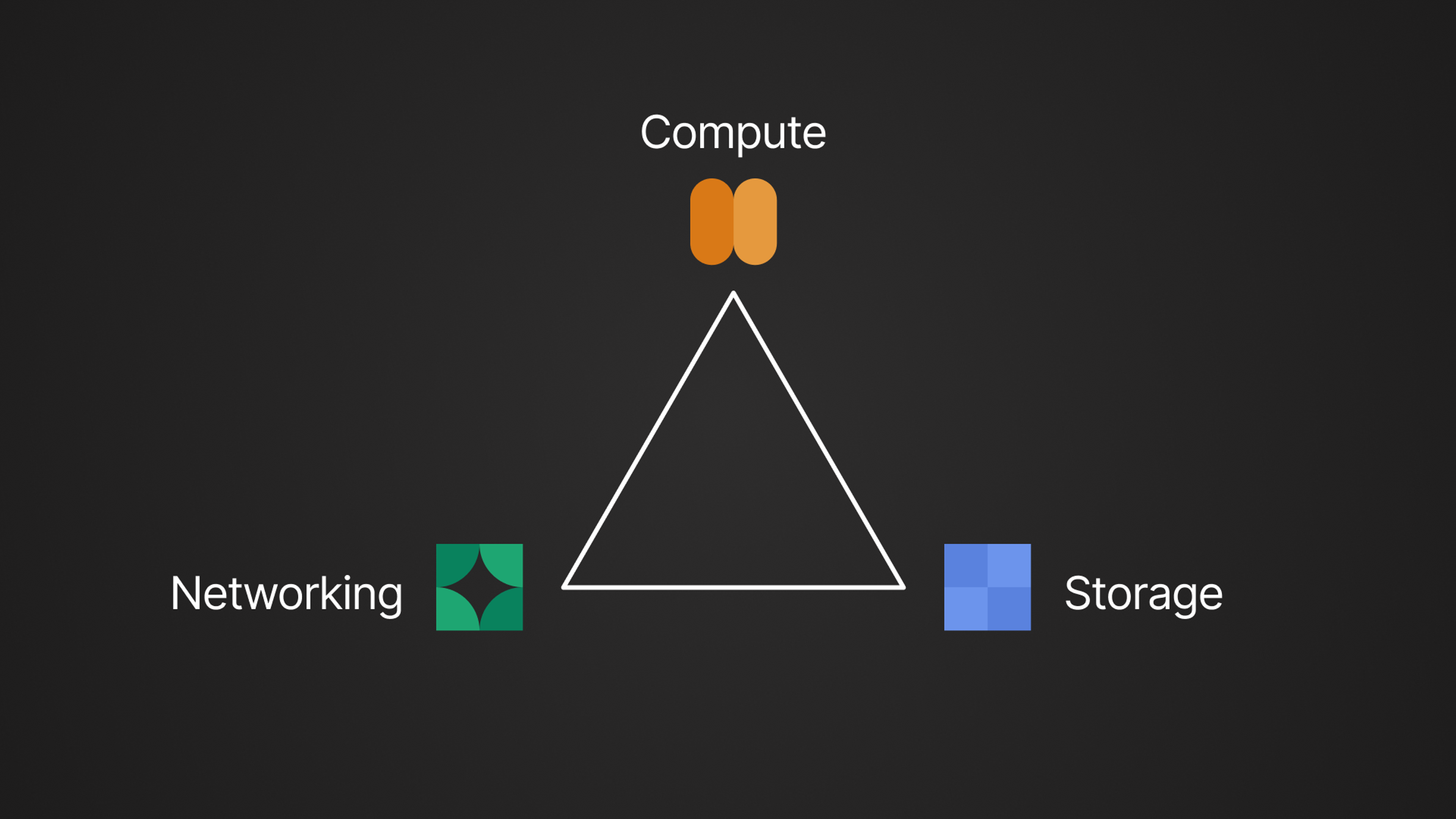
AI has made remarkable progress at translating human intent into software. But that old triangle still haunts us.
In fact, once writing the code gets easier, it becomes more obvious. Sandy didn’t get stuck writing the application. She got stuck giving it a computer, connecting to that computer, and sharing the result.
This was our original Tailscale thesis. We thought developers were scaling things they didn’t need to scale. When we traced that complexity backward, networking was the cause. Networking was too hard, and too dangerous by default.
A computer behind NAT couldn’t reliably accept a connection from another computer, so you put a server in a data centre. Then you needed a static public IP address, an open firewall port, DNS. Then TLS. Then authentication. Oops, make sure your auth library isn’t buggy. Where do the accounts come from? Do we need passwords and an email recovery flow? And oh, maybe now you need a team of SREs to keep this whole mess alive.
None of those decisions seemed crazy. They’re standard practice now. But they never used to be, not for tiny apps. They accreted, by accident, as we stacked half-solutions on problems that started at the very core of computing.
Tailscale digs down and begins to fix the core problems. Now a laptop, VM, phone, or Raspberry Pi can have a stable identity and make an encrypted connection directly to any other device you want. You can share a machine with someone outside your tailnet without publishing it to the Internet. Software can even embed Tailscale directly with tsnet instead of expecting a human to configure the network first.
Once that works, where the program runs becomes a much less dramatic decision. And you can start choosing differently.
Your laptop is a computer. So is the old Mac mini or Raspberry Pi in your basement. So is a machine at work. If the program needs better uptime, move it to a cloud VM. If it grows into the next Google, okay, do some infrastructure.
But the first coin flip probably doesn’t need all that stuff. It might not even need Spanner at all!
The next billion programmers aren’t going to tolerate the professional software stack just because professional programmers learned, through constant trauma, to live with it. They won’t be impressed that Kubernetes can schedule the coin-flipping app across three availability zones. (Note: Ha ha! Do not actually let k8s schedule across availability zones. You’ll have to do that some other way.)
The 100x as many programmers will wonder why the computer couldn’t just run the thing it made.
And they’ll be right.
Don’t rebuild the mainframe
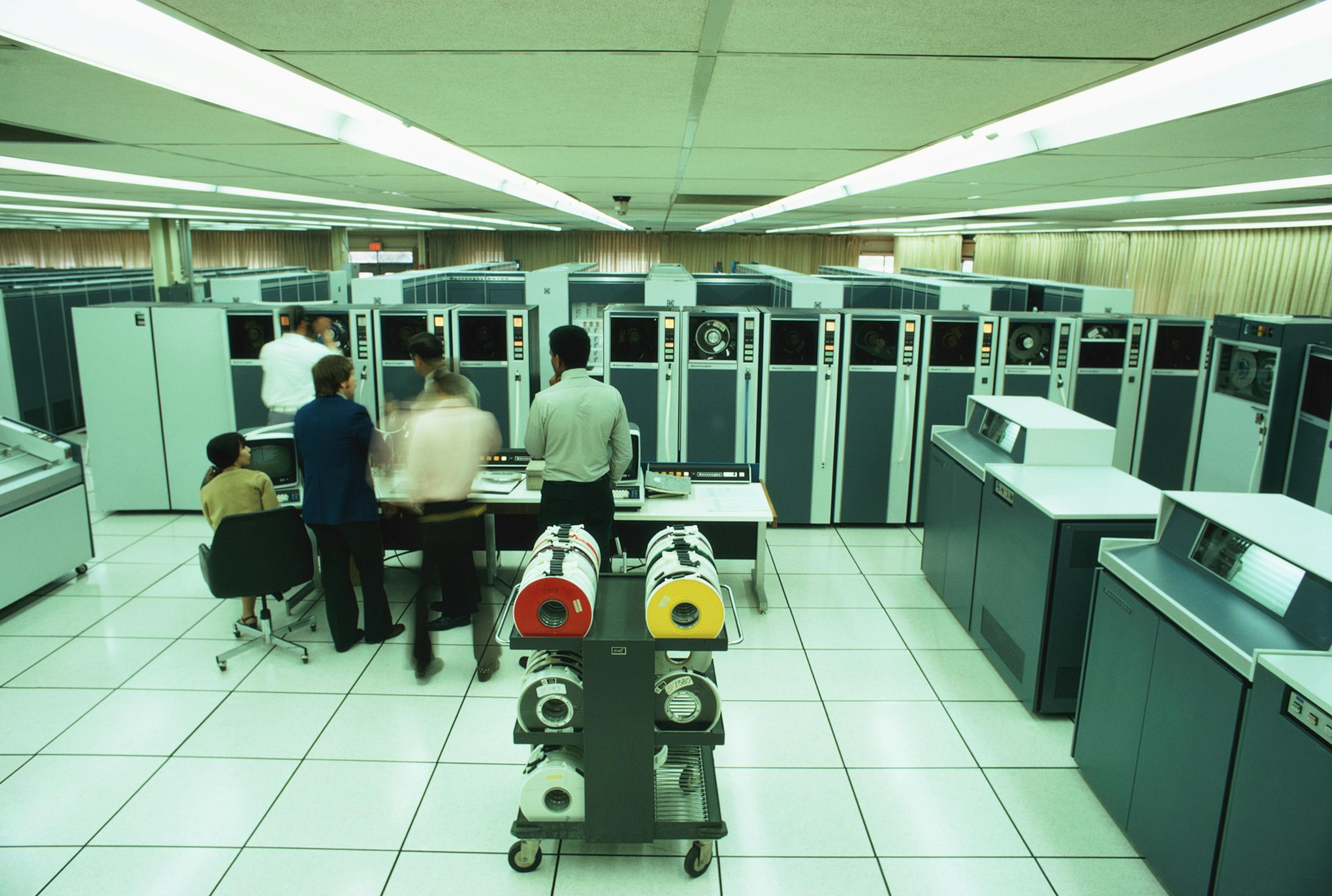
There is a very easy, but dangerous, way to hide all this complexity from the user: give it all to one company.
We’re already heading in that direction because that’s the default. We’ve spent the last 20 years learning to expect it.
People talk about AI as though the model is the product, but a model is only one part of a working system. Something has to provide the interface, decide what context to send, connect to source code, files, Slack, databases, and APIs, run code safely (somewhere), manage credentials and permissions, and control what can talk to what.
Naturally, the AI companies are building outward. The model gets an agent. The agent gets tools and connectors. Then come sandboxes, hosting, identity and enterprise controls. Each new piece makes the next one easier to buy from the same company.
From the provider’s point of view, this is entirely rational. Frontier models are expensive to build, so once you’ve spent that much on the model, of course you want to sell the agent, tools, hosting and everything else around it too. And as a bonus (for the provider), every new layer adds vendor lock-in.
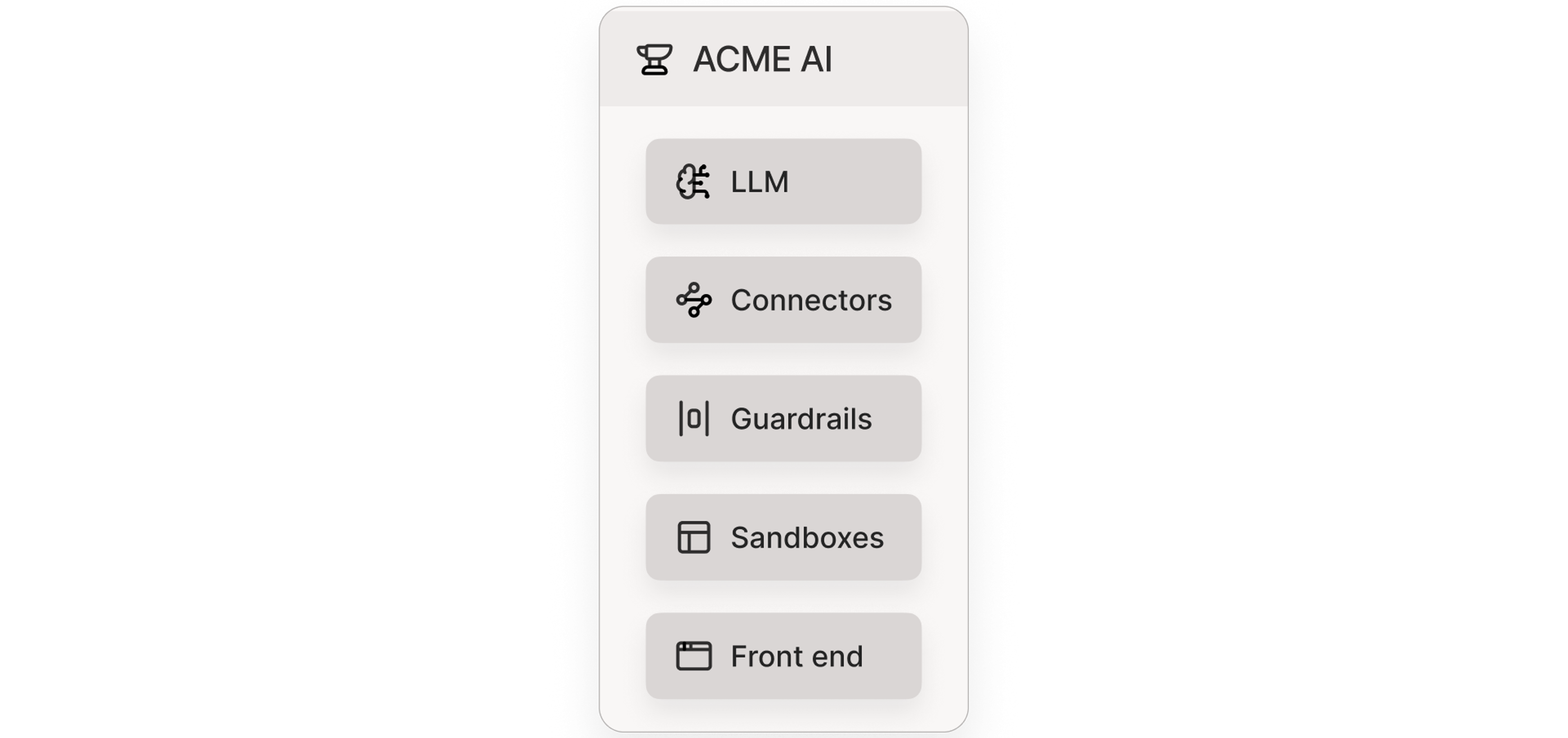
You start with an API call because it’s the easiest way to try the model. Then the agent uses that provider’s tool format, then its connectors, then its sandbox because everything already fits together. Security approves the setup. Your team builds workflows around it. They host provider-hosted apps in provider-branded sandboxes using a provider-branded frontend.
None of those decisions feels like lock-in when you make it, but they add up. A year later, changing the model means moving all your apps and retraining your entire company. Oops.
We’ve seen this movie already. The cloud started as an easier way to rent a computer. The computers were all interchangeable; rent them from whichever cloud has the best prices and reliability! But that all changed.
The magic words here are "value add." Cloud providers added a lot of value on top of those rental VMs: databases, identity, queues, observability, serverless functions, security products and hundreds of other things that work exceptionally well together. But only if you never leave.
It’s a real dilemma! All those things are legitimately valuable. But the whole is less than the sum of its parts. The lock-in kills competition, and competition is where innovation comes from.
In the AI world, it can happen again, even faster, if you let the model become the interface to everything else. It doesn’t just use the surrounding tools. It recommends them, configures them, and starts using them, sometimes without you making any explicit choice.
Meanwhile, outside the trillion-dollar companies, models are improving and prices are falling much faster than alternative cloud pricing ever did. The model that looks indispensable today will be overtaken, matched, or undercut six months from now. Sometimes paying for the frontier model is absolutely worth it. Sometimes a much cheaper model does the job just fine.
You won’t know for sure until you try. So the game is, stop you from trying.
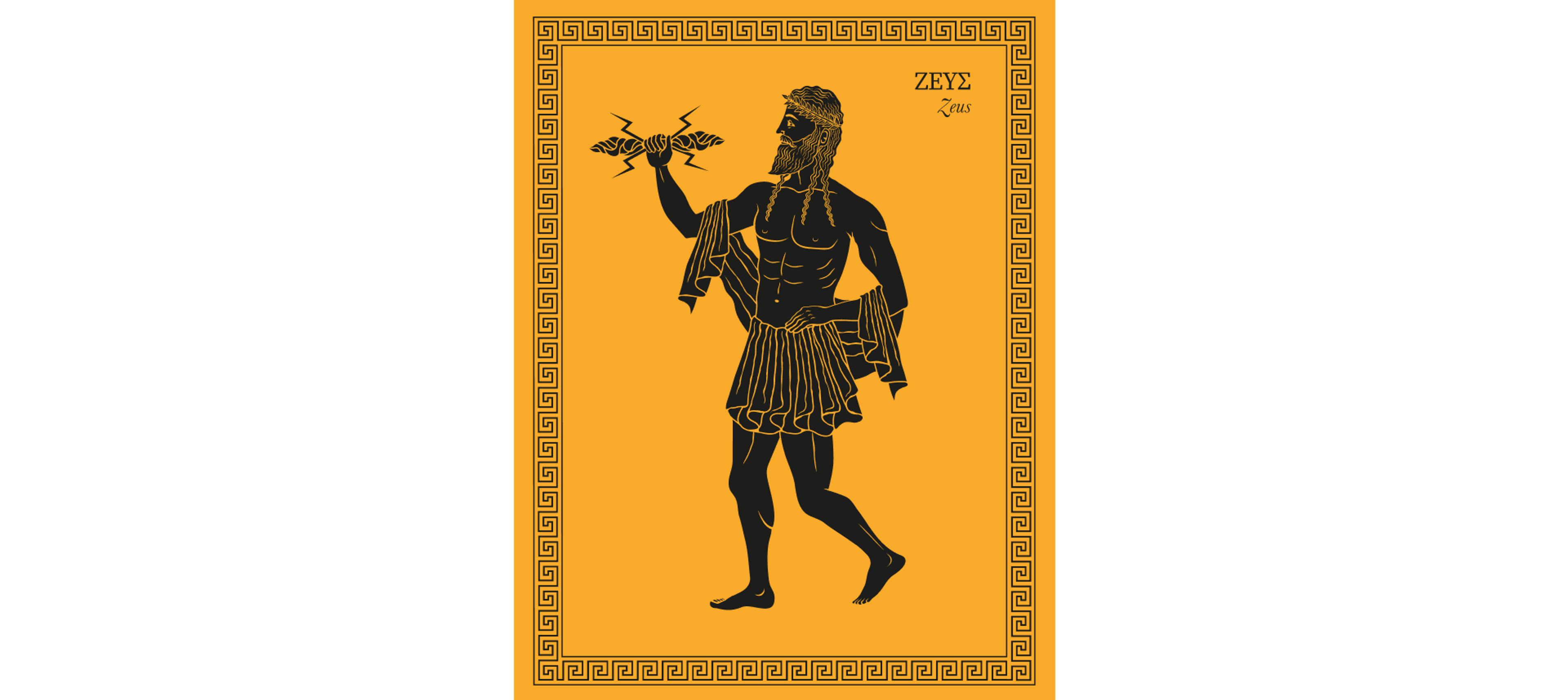
This reminds me of the story of Prometheus. Zeus took fire away from humanity. The unappreciated detail in the Prometheus story is that he stole it back from the gods and gave it to everyone.
In the modern version, these models were trained on the accumulated writing, code, science, and art of humanity. Now a handful of companies are packaging that capability inside systems only they control. Zeus stole the fire first.
I think we should steal it back.
Not the models themselves, there are plenty of good free ones already. But the ability for anyone to have an idea, make a computer build it, then run, move, and change what they built, anywhere and anytime they want, without asking one company for permission.
Open systems can still feel integrated
There is a persistent belief in the technology industry that you have to choose between integration and openness. One company can give you a polished system where everything fits together, or you can jumble together a half-working combination of self-hosted open source in your homelab.
I don’t buy it. We used to build good open systems. Our lost faith in that possibility is a kind of propaganda.
The Internet itself is a pretty good example. A Mac can connect through a router from one company, across networks run by several others, to a Linux server in another country, then display the result in a browser made by somebody else. The pieces work together constantly. Nobody had to own all of them.
The trick is having good interfaces.
Models, harnesses, sandboxes, connectors, identity systems, and compute providers should all be replaceable components. Replaceable does not mean identical. It means changing one part shouldn’t require throwing away every other part.
That idea is a key part of the vision behind Aperture. The model should be one component in the system, not the centre of gravity for everything around it. Aperture lets people and organizations put different model providers behind the same identity, policy, and access controls, so the model can change without rebuilding the rest of the stack.
Boundaries and interfaces matter for security. The lethal trifecta is a useful example: an agent becomes dangerous when it can combine untrusted input, private data and unrestricted network access. The answer is to control what the agent can reach, what it can read and where it can send data, regardless of which model happens to be running underneath.
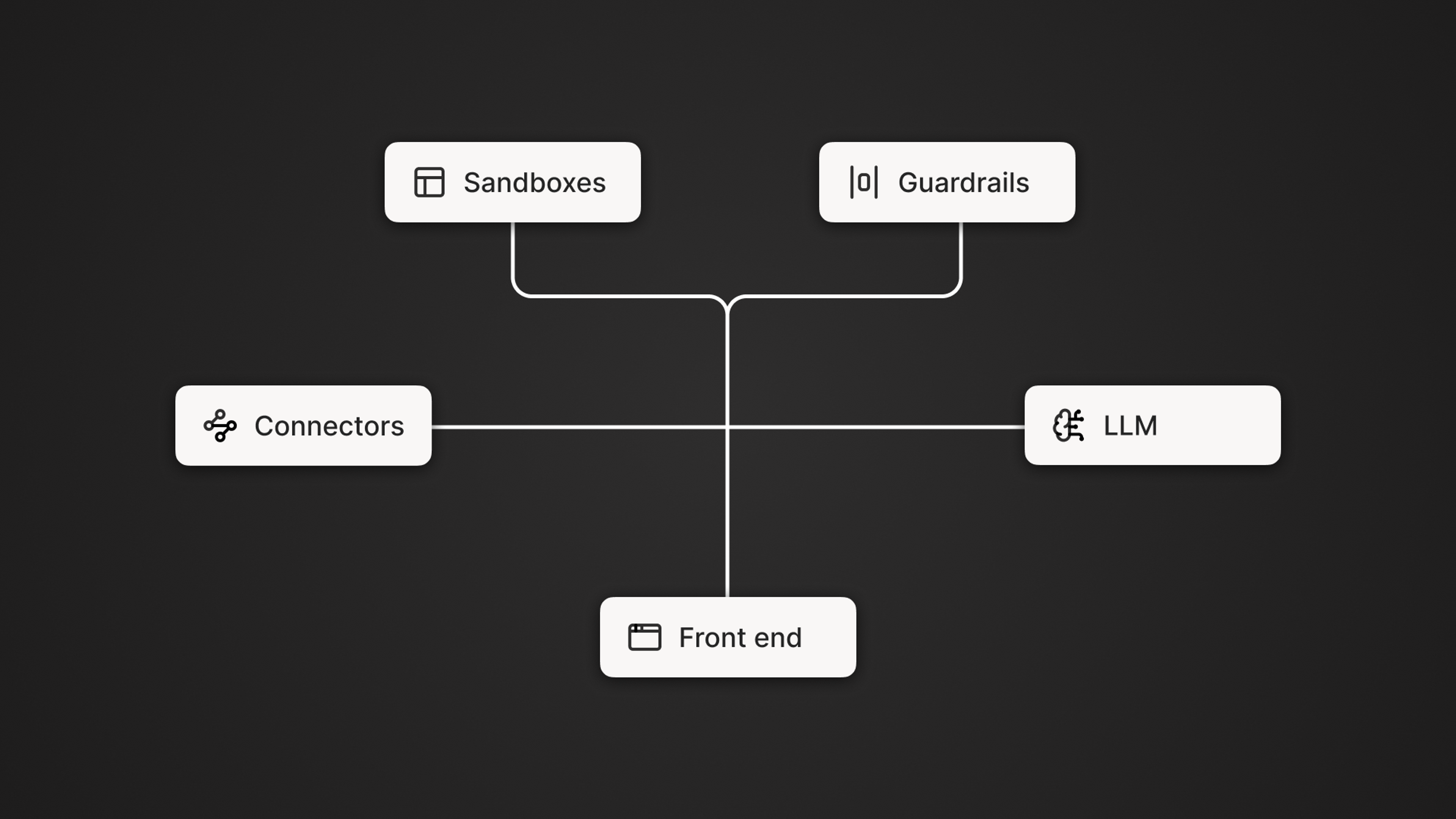
The response to AI lock-in can’t be another vertically integrated stack with a different logo on it. If one company still owns the model, interface, sandbox, network, compute and data path, the underlying problem hasn’t changed.
A good platform gives up control. Customers might replace your component. Competitors might plug into the same system. Someone might build a combination you never anticipated. That’s not a failure of the platform. That’s what makes it a platform in the first place.
Tailscale has always been built around that idea. We don’t need to carry every packet or own every service connected by the network. The same should be true of the AI stack. The model can come from one company, the compute and storage from another, and the network from somewhere else. Some pieces can be commercial services, some open source, some operated by the customer.
And once you have that freedom, location becomes a choice too.
Sovereignty means having somewhere else to go
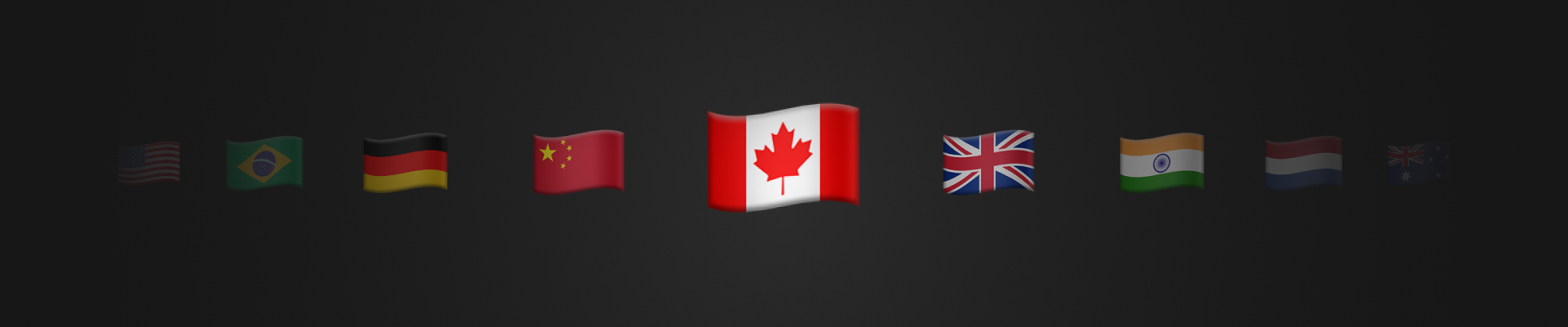
Canada, Europe, and plenty of individual companies are talking about AI sovereignty. If your country’s companies, governments, hospitals, and researchers depend on foreign AI providers, then your economy operates at the whim of someone else.
The current response seems to be to recreate the whole stack domestically, in each country. Train a Canadian frontier model on Canadian GPUs in a Canadian data centre, serve it through a Canadian cloud, and keep everything inside the border.
There are cases where that makes sense. Canada should have frontier AI companies. It should have research computers available. It should have data centres. Canada’s national AI strategy is right to care about that capacity.
But sovereignty gets much easier once we stop treating the entire AI system as a single indivisible object.
Where a model was trained, who owns it, where inference runs, where customer data lives, who controls the application, and which country’s laws govern the provider are separate questions. You have sovereignty as long as you maintain the ability to walk away.
An open-weight model trained in China can run in Toronto. The Canadian customer’s data doesn’t need to go to China. A Canadian model can run in Germany. A Canadian inference provider can compete with an American one while using a model neither company trained.
Tailscale is Canadian, I’m Canadian, and I want my own country to get this right. Canada probably isn’t going to outspend the giant US AI companies, but it doesn’t have to. It can get very good at making the open version as easy to use as the centralized one.
If Canada can do it, so can you. A European provider can do the same thing under European jurisdiction. Another provider can specialize in cheap open models. Another can compete on latency or a particular workload.
And then we have a real market.
That’s better for resilience because there is more than one supplier. It’s better for trade because countries can provide the components they’re good at instead of reproducing the entire stack. Sensitive workloads can remain under local control without requiring every country to build every layer itself.
And suppliers have to keep earning the business.
Competition works much better when customers can leave.
100x more owners
For the last couple of decades, we’ve gradually stopped treating personal computers as computers. A MacBook Pro has more CPU, GPU, memory, and storage than machines we called supercomputers as recently as 20 years ago. But we mostly use it as a very fancy terminal connected to somebody else’s cloud mainframe.
A new generation of AI-built software gives us a chance to rewrite the future.
I still like the cloud. I like frontier AI models too, they’re amazing. Sometimes somebody else’s computer is exactly the computer you want.
I just don’t want it to be the only computer you and your agent are allowed to use.